Opening your own salon suite is the most common way independent stylists, barbers, estheticians and other beauty pros in Houston go into business for themselves. You rent a private, lockable studio, set your own prices and hours, and keep what you earn after a flat monthly rent. What you take on in return is the business side: licensing, insurance, money, booking and marketing.
This guide walks through how to start a salon suite business in ten practical steps, in the order most people actually do them. Each step tells you what to decide and what to have ready, so you can open a salon suite business in Houston without surprises.
10 Easy Steps to Starting a Salon Suite Business in Houston
- Get (or confirm) your Texas license
- Set up the business itself
- Get insured
- Write a simple business plan and budget
- Know your market and pick your niche
- Choose the right suite and location
- Design and equip your suite
- Set up booking, payments and policies
- Build your brand and move your clients over
- Launch, then manage your first 90 days
1. Get (or confirm) your Texas license
Every service you offer has to be covered by your own license from the Texas Department of Licensing and Regulation (TDLR): a cosmetology operator, esthetician, manicurist, barber or eyelash extension license, depending on what you do. Check that your license is active and that your services fall within its scope before you sign anything.
There is a second license people often miss: because a salon suite is its own enclosed workspace, the suite itself needs a TDLR license too, separate from your personal one. We explain how that works, and what to apply for before move-in, in Do you need a license to rent a salon suite in Texas?
2. Set up the business itself
Even as a one-person business, set it up properly from day one:
- Business structure and name. Decide whether to operate as a sole proprietor or form an LLC, and register an assumed name (DBA) if you will trade under a name other than your own.
- Separate bank account. Keep business income and expenses apart from your personal money. It makes bookkeeping and taxes far easier.
- Taxes. As a suite owner you are self-employed, so plan for income and self-employment taxes. If you sell retail products, Texas requires a sales and use tax permit from the Comptroller.
Rules vary with your situation, so have a tax professional review your setup before you open. A short consultation now costs far less than fixing problems later.
3. Get insured
When you work for a salon, the owner carries the insurance. In your own suite, that is your job. Most suite owners carry professional liability (in case a service goes wrong) and general liability, and many add coverage for their equipment and products. Your lease may also set minimum insurance requirements. Our guide to insurance for a salon suite rental covers what each policy does and what to ask a broker.
4. Write a simple business plan and budget
You do not need a bank-style document, but you do need to know your numbers before you commit. Create a budget that lists every monthly cost: your suite rent, products, insurance, booking software, marketing and any loan or equipment payments. Then work out how many clients and what average ticket you need to cover it with room to spare.
If you are coming from a commission salon, run your current numbers through our commission vs. lease comparison to see what you would keep in your own suite compared with your split today. It is the quickest way to tell whether you are ready to move now or should build your book a little longer first.
5. Know your market and pick your niche
Houston is big and varied, and the clients near Westheimer and the Energy Corridor want different things from clients in Sugar Land. Look at who already books with you, which services they come back for, and what nearby professionals charge and promote. Then decide what you want to be known for: color, extensions, natural hair, men’s grooming, lashes, skin care or something else.
A clear niche makes every later step easier, from your menu to your marketing. If you are still deciding, our post on finding your niche as a beauty professional walks through how to choose one.
6. Choose the right suite and location
Your location decides how easy it is for your existing clients to keep coming and for new ones to find you. Weigh:
- Distance for your current clients. A short, easy drive keeps your regulars loyal.
- Parking and access. Ample parking and clear entrances matter more than most people think.
- Security and hours. 24/7 access lets you take early and late appointments.
- What is included. Utilities, Wi-Fi, laundry and on-site management all affect your real monthly cost.
- Lease terms. Read the lease carefully before signing. Our guide to salon suite lease agreements covers what to look for.
7. Design and equip your suite
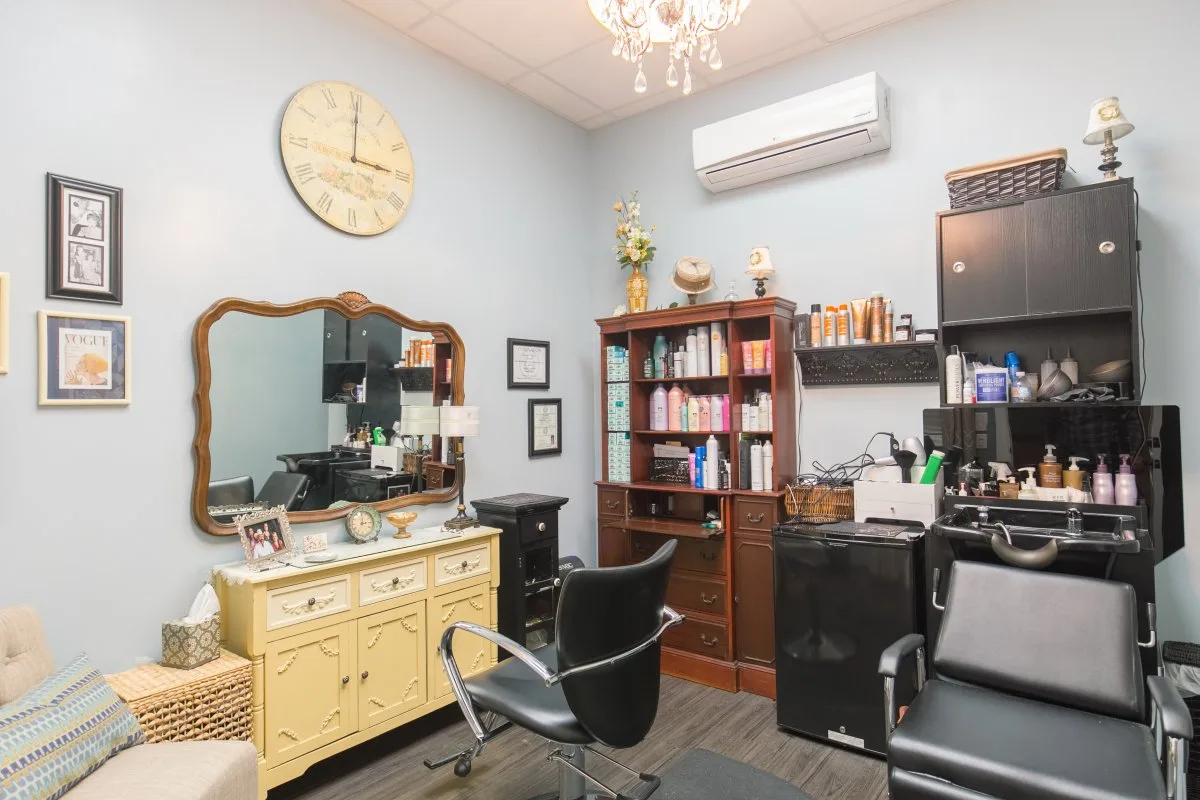
Your suite is your brand in physical form. Plan the layout around how you work: where your station, shampoo bowl, retail shelf and storage go, and how a client moves through the room. Spend on the things clients touch and see (a comfortable chair, good lighting, a clean, uncluttered station) before decorative extras. Browse our photo gallery for ideas on how finished suites look, and list your must-have tools before you shop so you do not overspend.
8. Set up booking, payments and policies
Most independent pros run their business from a booking app that handles online scheduling, reminders, deposits, payments and client notes. Choose one before launch so clients can book the moment you announce your move.
Write your policies down too: cancellations, late arrivals, no-shows and deposits. Clear, consistent policies protect your income, and clients respect them when they know them upfront. A good policy answers four questions in plain language:
- How much notice does a client need to give to cancel or reschedule?
- How late can a client arrive before the service is shortened or rebooked?
- What happens after a no-show, and is a deposit required to book again?
- Which services, such as long color or extension appointments, require a deposit upfront?
Put the policy in your booking app, on your website or social profiles, and in your confirmation messages, then apply it the same way for every client.
9. Build your brand and move your clients over
Tell your current clients early and personally: a text or call from you, not just a social post. Give them your new address, how to book and anything that is changing. Then make it easy for new clients to find you:
- Update your Instagram, Facebook and booking profile with your new location.
- Get listed in a local stylist directory; it is one of the fastest ways to be found by new clients.
- Ask happy clients for reviews and referrals.
For more ideas, see our post on attracting clients as a new salon suite professional.
10. Launch, then manage your first 90 days
Treat the first three months as a test. Track how many clients you see each week, your average ticket, rebooking rate and where new clients came from. Compare those numbers with your budget every month and adjust: promote the services that sell, rebook clients before they leave, and keep your schedule as full as you can during your best hours.
After 90 days you will know what works, what to raise or drop from your menu, and how much room you have to grow.
Image Salon Studios: Your Ideal Salon Suite Rental Choice
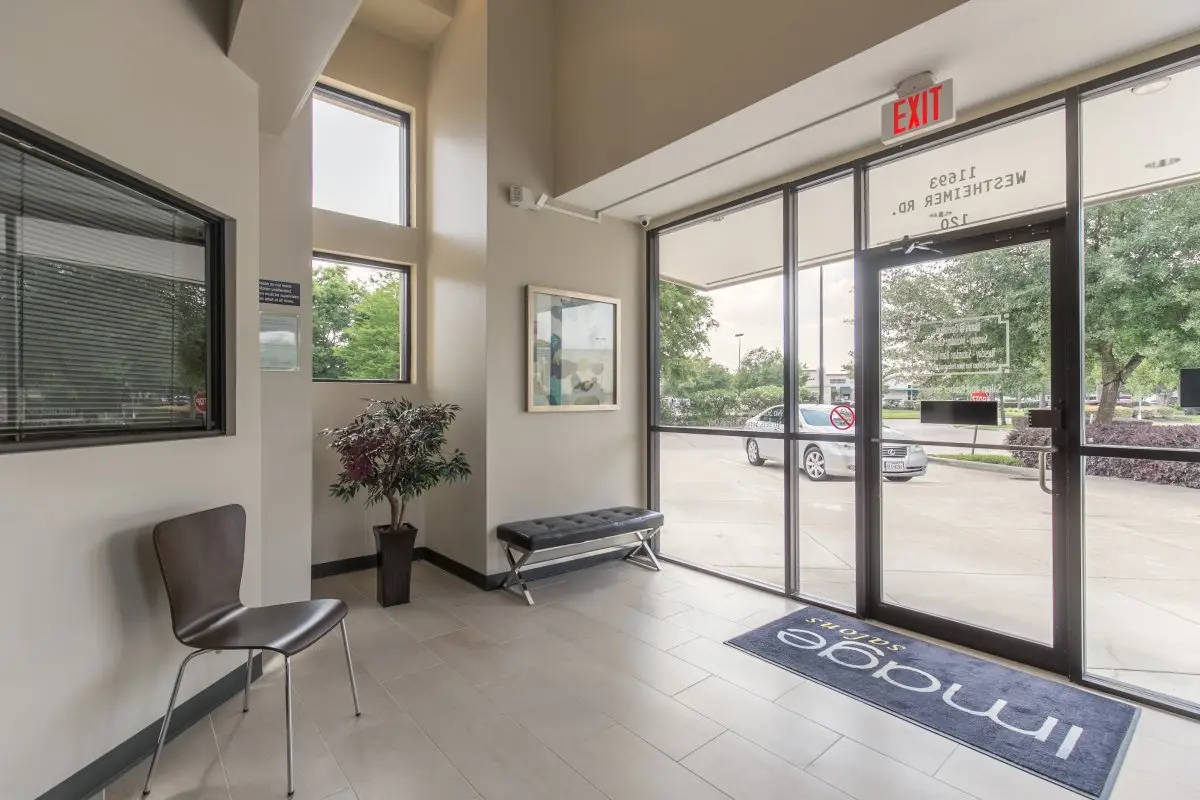
If you are looking for the best salon suites in Houston, Texas, Image Salon Studios offers private, lockable suites at Royal Oaks Village on Westheimer Road in Houston and at First Colony in Sugar Land. Each suite is leased and operated independently, so you run your business your way, with utilities, Wi-Fi, 24/7 access and full-time on-site management included in one flat monthly rent.
We are locally owned, and our job is to give independent beauty professionals a professional, well-kept space where they and their clients feel at home. When you are ready, you can apply online, or see a suite for yourself first: book a tour at Image Salon Studios and take the first real step toward your own business.
Frequently asked questions
How do I start a salon suite business in Texas?
Make sure your personal TDLR license covers your services, get the suite itself licensed with TDLR, set up your business and taxes, get insured, build a budget, then choose a suite, set up booking and tell your clients where to find you.
Do I need my own clients before opening a salon suite?
It helps a great deal. Most pros who move into a suite bring an existing book of clients with them. If you are newer, plan extra marketing time and a cautious budget for your first few months.
Is owning a salon suite better than working on commission?
It depends on your client base and how much of the business side you want to handle. Suite owners keep their full service income after rent and expenses; commission stylists trade part of their income for the salon covering costs and marketing. Our commission vs. lease comparison helps you compare with your own numbers.
What do I need before signing a salon suite lease?
An active TDLR license, a plan for the suite’s own license, insurance quotes, a budget you are comfortable with and a plan for moving your clients over.
Related Articles
Related at Image Salon Studios Looking for space of your own? See our commission vs. lease comparison.


Ready to Feel the Vibe in Person?
Tour any of our three locations — no pressure, no commitment. Just come see what your future studio looks like.