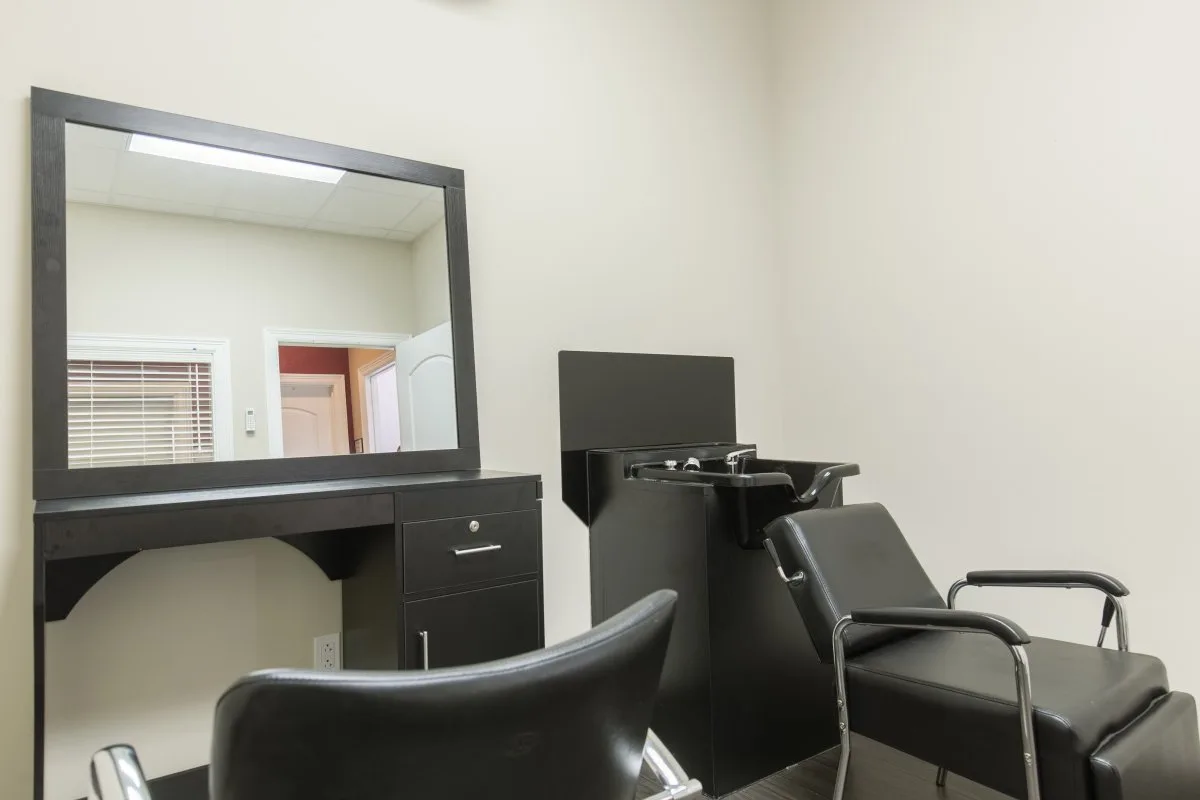
Every stylist, barber and esthetician eventually asks the same question: should I stay on commission, rent a booth, or move into my own salon suite? The answer depends less on which model is “best” and more on where you are in your career, how full your book is, and how much of the business you want to run yourself. This guide lays the three models side by side, gives you the formulas to work out what you would actually keep, and covers the signs that it’s time to move.
The three models in plain English
Commission
You work for the salon. The owner provides the space, the products, the front desk and usually the clients, and you receive an agreed percentage of the services you perform (sometimes plus a cut of retail). In most commission salons you are an employee, so taxes are withheld from your pay. The salon sets the prices, the schedule and the brand you work under.
Booth (chair) rental
You rent a station inside someone else’s salon and run your own book. You set your prices and hours, buy your own products, and keep what you earn after rent. You share the floor, the reception area and often the music and atmosphere with everyone else, and you work under the host salon’s rules. Booth renters are self-employed.
Private salon suite
You lease your own enclosed, lockable room inside a building designed for independent pros. Like booth rental you are self-employed and keep what you earn after rent, but the space is entirely yours: your brand on the door, your décor, your music, your schedule, with privacy for every client. If you are new to the idea, our guide to what a salon suite is and how it works covers the basics.
Commission vs. booth rent vs. salon suite at a glance
| Commission | Booth rental | Salon suite | |
|---|---|---|---|
| Who sets prices | The salon | You | You |
| Who sets your hours | The salon (usually) | You, within the salon’s opening hours | You (many buildings, including ours, offer 24/7 access) |
| Products you use and sell | The salon’s | Yours | Yours |
| Who “owns” the client relationship | Often the salon, sometimes by contract | You | You |
| Privacy | Shared floor | Shared floor | Your own closed room |
| Your brand | The salon’s brand | Limited | Fully yours |
| Tax status (general) | Usually employee (W-2): taxes withheld | Self-employed (1099 or none): you handle your own taxes | Self-employed: you handle your own taxes |
| What you pay for | Little or nothing up front | Booth rent, products, tools, insurance, booking software | Monthly suite rent, products, tools, insurance, booking software |
| Risk | Lowest: the salon carries the overhead | Medium: rent is due whether you are busy or not | Medium: rent is due whether you are busy or not |
A note on taxes: the employee-versus-self-employed line matters because self-employed pros pay their own income and self-employment taxes and can deduct legitimate business expenses. Rules depend on your situation, so talk to a tax professional before you switch.
What you actually keep: the formulas
Comparing models by “percentage” alone is misleading, because commission and rent work in completely different ways. Instead, work out your monthly take-home under each model with your own numbers. Fill in the blanks below from your booking history.
1. Your monthly service revenue
Monthly service revenue = clients per week × average ticket × 4.3
Use 4.3 because a month averages about 4.3 weeks. Be honest about clients per week; use a typical week, not your best one.
2. Commission take-home
Commission take-home = monthly service revenue × your commission % + retail commission, if any
Remember that taxes are withheld from this amount, and you usually pay little for products or space.
3. Booth or suite take-home (before tax)
Independent take-home = monthly service revenue + retail profit − monthly rent − products & supplies − insurance − booking software & card fees − marketing
Then set aside a share for income and self-employment taxes, because nobody withholds them for you.
4. Your break-even
Break-even clients per week = monthly fixed costs (rent + insurance + software) ÷ (average ticket − product cost per client) ÷ 4.3
That is the number of clients you need each week just to cover your costs. Everything above it is yours. If your current book clears that number comfortably, going independent is likely to pay off.
Rather than doing it by hand, plug your numbers into our commission vs. lease calculator. It shows the comparison side by side.
The costs and perks the formulas don’t show
Money is only part of the comparison. Before you decide, weigh the things that never appear on a pay stub:
- Benefits and paid time off. Some commission salons offer them; as an independent pro, a vacation week is a week without income, so plan for it.
- Education. Salons often pay for classes. On your own, continuing education is a business expense you choose and schedule yourself.
- Admin time. Booking, payments, restocking and bookkeeping take hours each week unless you set up tools for them.
- Retail. Independent pros keep the full retail margin, which can make a real difference over a year.
- Client experience. A private room lets you control music, temperature and conversation, which many clients value and pay for.
Who each model suits
- Commission fits pros who are newly licensed, still building speed and confidence, or who want a steady stream of walk-ins and no business admin. It is a great place to learn.
- Booth rental fits pros with a growing book who want to set their own prices but are not ready to run a fully separate space, or who like the social energy of a shared floor.
- A salon suite fits pros with an established, loyal clientele who want full control of their brand, schedule and client experience, and who value privacy for services like color, extensions, skin care, lashes or massage.
Image Salon Studios leases private suites rather than booths. If you are comparing salon booth rental in Houston, a suite is the step up: the same independence, plus your own room, your own door and your own brand.
Signs you’re ready to move from commission to a suite
- Your book is consistently full and clients follow you, not the salon.
- Your numbers clear the break-even formula above with room to spare.
- You want to choose your own products, prices and hours.
- Clients ask for more privacy, or your services need a quieter space.
- You are ready to handle your own bookings, payments and taxes, or to set up tools that do it for you.
How to make the move without losing clients
Most of the risk in going independent comes from the transition, not the model. Check your current agreement for non-solicitation terms before you announce anything. Then collect client contact details you are entitled to keep, set up your booking link and social profiles before your last day, and tell clients where you are going and when. Our guide to moving from employee to salon suite owner walks through it step by step, and the salon suite business plan template helps you set targets for your first 90 days.
When you are ready to see the space in person, tour our salon suites for rent in Houston at Royal Oaks on Westheimer or at our Sugar Land locations in First Colony. Every suite is private and lockable, with utilities, Wi-Fi and 24/7 access included in one monthly rent. Schedule a tour and bring your numbers.
Frequently asked questions
Is booth rent better than commission?
It depends on your book. Booth rent pays off once your service revenue comfortably covers rent and supplies; commission is safer while you are still building a clientele. Run both through the formulas above to see where you stand.
What is the difference between booth rental and a salon suite?
Both make you self-employed. A booth is a station on a shared salon floor under the host salon’s rules; a suite is your own private, lockable room where you control the brand, décor and client experience.
Do I pay my own taxes in a booth or salon suite?
Yes. Booth renters and suite renters are generally self-employed, so no one withholds taxes for them. Set money aside each month and speak with a tax professional about deductions.
How many clients do I need to rent a salon suite?
Use the break-even formula: divide your monthly fixed costs by what you keep per client, then by 4.3. That gives the number of clients per week you need to cover costs; anything above it is profit.
Related Articles
Related at Image Salon Studios Looking for space of your own? See our salon booth rental in Houston.

Ready to Feel the Vibe in Person?
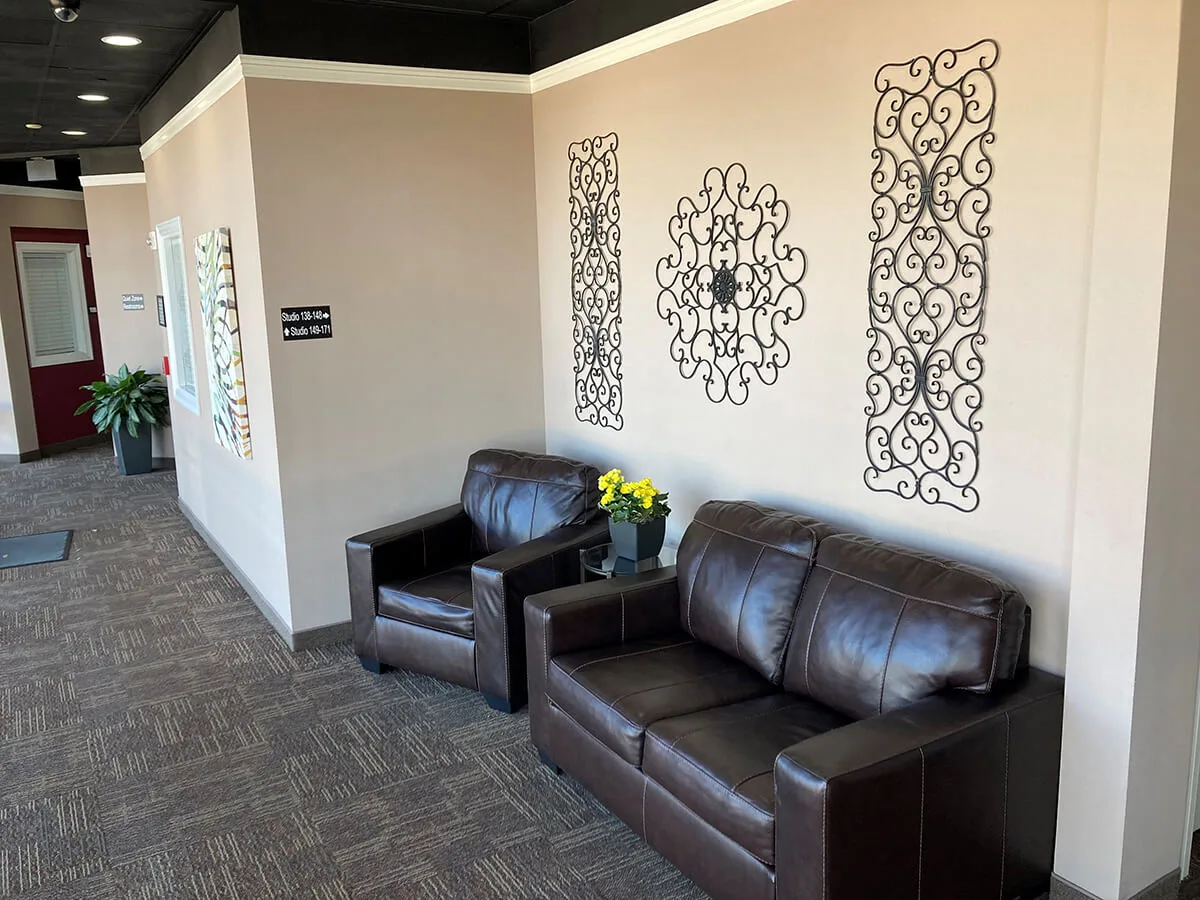
Tour any of our three locations — no pressure, no commitment. Just come see what your future studio looks like.